




Il vento salmastro del porto di Grimsby frustava le vetrate unte della “The Frying Dutchman”, una tavola calda che sembrava esser stata lì da quando i merluzzi avevano imparato a nuotare. Dentro, il vapore denso di olio di cottura si mischiava a risate sguaiate, avvolgendo ogni cosa in un’aura dorata. Tu, caro lettore, immagina di entrare e sentire immediatamente quell’abbraccio: il profumo inebriante del grasso bollente che canta, la promessa della perfezione croccante. Davanti al bancone di zinco lucido, c’era Big Bertha, la proprietaria, una donna così larga che doveva girarsi di lato per entrare nella cucina, che stava sbraitando contro un cliente abituale, l’anziano Arthur, famoso per lamentarsi che le patatine fossero “troppo patatose”. «Arthur, mio tesoro,» tuonò Bertha, «Se non ti piace la consistenza delle mie patate, forse dovresti ordinare della sabbia! È gratis e garantisco che è meno ‘patatosa’!» Arthur, con l’immancabile cappello da marinaio stinto, le rispose con un sorriso sdentato: «Ah, Bertha, la tua acidità è l’unica cosa più forte del tuo aceto di malto! E comunque, oggi voglio qualcosa di nuovo, ho i denti che sognano una sfida!».
Quella mattina, il giovane e un po’ impacciato apprendista di Bertha, il quindicenne Finn, armeggiava con una partita di patate che, diciamocelo, aveva tagliato con una sciatteria degna di un marinaio con il mal di mare. Erano tutte spesse, irregolari, le chiamava affettuosamente “mazze da hockey”. Contemporaneamente, sul fornello a fianco, c’era un bellissimo filetto di merluzzo fresco, pescato all’alba, che giaceva avvolto in una pastella che Finn aveva preparato per errore troppo densa, quasi una corazza medievale. La ricetta della pastella, che oggi conosciamo e amiamo, è in realtà un semplice miracolo: farina, un pizzico di sale e una spruzzata abbondante di birra chiara o, in mancanza, acqua frizzante, per darle quella leggerezza spumosa che scoppia in bocca. Ma la sua pastella? Sembrava calcestruzzo.
Quando Bertha vide quella pastella, si mise le mani sui fianchi, facendo vibrare l’intero bancone. «Finn! Ma hai pescato il pesce o lo hai murato? Quella non è pastella, è un bunker anti-atomico!» Finn, rosso come un peperone, borbottò: «Volevo che fosse… croccante, Bertha! Un’armatura per il re dei mari!». Arthur, intercettando la discussione, batté un pugno sul bancone. «Un’armatura! Mi piace! E quelle patate che sembrano tronchi d’albero, le hai fritte o le hai appena tirate fuori dal Tamigi?». In un impeto di nervosismo, Finn lasciò cadere sia il merluzzo “murato” che le patate “tronchi d’albero” in due vasche separate di olio sfrigolante, dove nuotarono per un tempo che, a giudicare dalle esclamazioni, sembrava un’eternità.
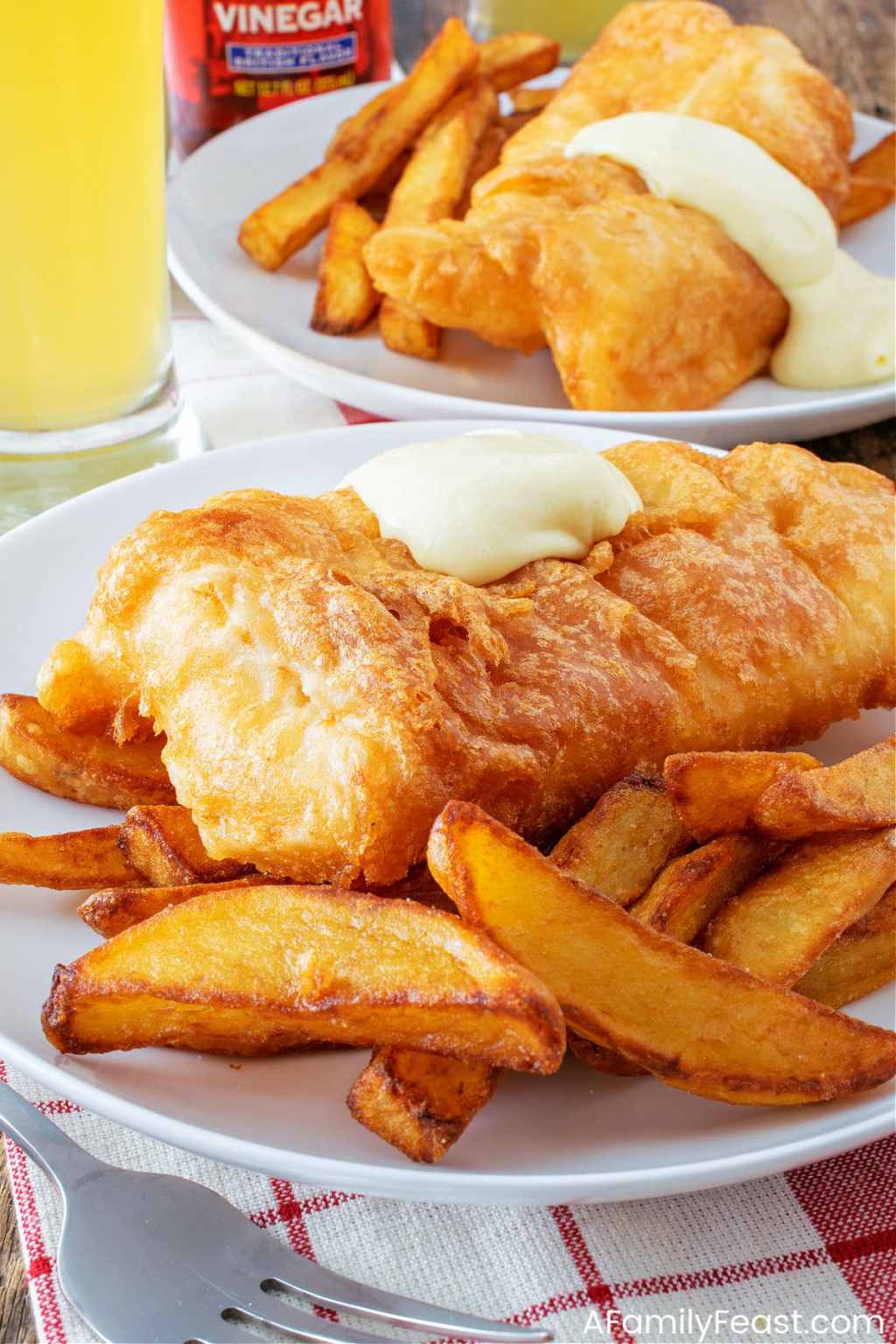
Quando li tirò fuori, però, l’odore che invase la tavola calda fu una rivelazione. Amico mio, non era un semplice odore di fritto; era l’essenza stessa della felicità culinaria. Il merluzzo, protetto dalla sua pastella esagerata, era rimasto incredibilmente umido e bianco all’interno, quasi cotto a vapore, ma la sua superficie era di un biondo dorato, con una crosta talmente spessa che… CRACK!… faceva rumore solo a toccarla. Le patatine, spesse e rustiche, erano rimaste morbide e farinose dentro, ma il taglio irregolare aveva creato spigoli che si erano fritti fino a diventare lamine di puro scrocchio, un suono inequivocabile di croccantezza. Bertha, annusando l’aria come un cane da tartufo, prese un boccone, gli occhi si spalancarono e mormorò: «Arthur, la tua “sabbia” è pronta!». Arthur provò il suo pezzo e le lacrime gli inondarono il viso, ma non per la commozione. «Bertha, questi “tronchi” fritti sono così buoni che mi fanno piangere! E il pesce? È un tesoro in un forziere croccante!». E così, tra risate, sbeffeggiamenti e l’esigenza di sfamare un vecchio brontolone, nacque la perfetta ricetta delle fish and chips: un filetto di merluzzo (o eglefino) fresco, avvolto in una pastella che deve essere densa abbastanza da proteggerlo e fritta brevemente in olio caldo, accompagnato da patate tagliate a bastoncino spesso, cotte due volte (double-fried) per garantire quel cuore morbido e la superficie super-croccante. Un trionfo di consistenze, un inno al grasso sacro, servito in un foglio di giornale unto, accompagnato da una spruzzata di aceto di malto e magari dei “mushy peas” (piselli in purea) se siete dei temerari!
🍻🍻🍻🍻🍻🍻🍻🍻🍻🍻🍻🍻🍻🍻🍻🍻🍻🍻🍻🍻🍻🍻🍻🍻🍻🍻🍻🍻🍻🍻🍻🍻🍻🍻🍻🍻🍻
The salty wind from Grimsby Harbour whipped against the greasy windows of “The Frying Dutchman,” a chippy that looked like it had been there since cod learned to swim. Inside, the thick steam of cooking oil mingled with raucous laughter, wrapping everything in a golden aura. You, dear reader, can imagine walking in and immediately feeling that embrace: the intoxicating scent of singing, boiling fat, the promise of crispy perfection. Standing before the gleaming zinc counter was Big Bertha, the owner—a woman so broad she had to turn sideways to fit into the kitchen—who was shouting at a regular, old Arthur, famous for complaining that the chips were “too potatoey.”
“Arthur, my love,” Bertha thundered, “If you don’t like the consistency of my potatoes, perhaps you should order some sand! It’s free and I guarantee it’s less ‘potatoey’!” Arthur, with his inevitable faded sailor’s hat, replied with a toothless grin: “Ah, Bertha, your sourness is the only thing stronger than your malt vinegar! Anyway, today I want something new, my teeth are dreaming of a challenge!”
That morning, Bertha’s young and slightly clumsy apprentice, fifteen-year-old Finn, was fiddling with a batch of potatoes that, let’s face it, he had sliced with a sloppiness worthy of a seasick sailor. They were all thick and irregular; he affectionately called them “hockey sticks.” Meanwhile, on the next stove, a beautiful, fresh cod fillet, caught at dawn, lay wrapped in a batter that Finn had mistakenly made too thick—almost like medieval armour. The batter recipe we know and love today is actually a simple miracle: flour, a pinch of salt, and a generous splash of light beer or, failing that, sparkling water, to give it that frothy lightness that bursts in your mouth. But his batter? It looked like concrete.
When Bertha saw that batter, she put her hands on her hips, making the entire counter vibrate. “Finn! Did you catch the fish or did you brick it up? That’s not batter, it’s a nuclear bunker!” Finn, red as a beetroot, mumbled: “I wanted it to be… crispy, Bertha! Armour for the King of the Sea!” Arthur, intercepting the discussion, banged a fist on the counter. “Armour! I like it! And those potatoes that look like logs, did you fry them or did you just pull them out of the Thames?” In a fit of nerves, Finn dropped both the “bricked” cod and the “log” potatoes into two separate vats of sizzling oil, where they swam for a time that, judging by the exclamations, seemed like an eternity.
When he pulled them out, however, the aroma that filled the chippy was a revelation. My friend, it wasn’t just the smell of frying; it was the very essence of culinary happiness. The cod, protected by its exaggerated batter, remained incredibly moist and white inside, almost steamed, but its surface was a golden blonde, with a crust so thick that… CRACK!… it made a noise just to touch it. The thick, rustic chips remained soft and floury inside, but the irregular cut had created edges that had fried into wafers of pure crunch—an unmistakable sound of crispness. Bertha, sniffing the air like a truffle dog, took a bite, her eyes wide, and murmured: “Arthur, your ‘sand’ is ready!” Arthur tried his piece, and tears flooded his face, but not from emotion. “Bertha, these fried ‘logs’ are so good they make me weep! And the fish? It’s a treasure in a crunchy chest!” And so, amidst laughter, taunts, and the need to feed a grumpy old man, the perfect fish and chips recipe was born: a fresh cod (or haddock) fillet, wrapped in a batter that must be thick enough to protect it and briefly deep-fried in hot oil, accompanied by thickly cut chips, double-fried to ensure that soft heart and a super-crispy surface. A triumph of textures, an ode to sacred fat, served on a greasy sheet of newspaper, accompanied by a splash of malt vinegar and maybe some mushy peas, if you’re feeling daring!


 Sogni e poesie di una donna qualunque
Se puoi lascia un’emozione sarà la benvenuta